Community Stories
Community Stories
Community Stories
Community Stores in Los Angeles: A Grassroots Model for Dignity and Stability
Community Stores in Los Angeles: A Grassroots Model for Dignity and Stability
Community Stores in Los Angeles: A Grassroots Model for Dignity and Stability
Ally Foo
Ally Foo
December 2, 2025
December 2, 2025
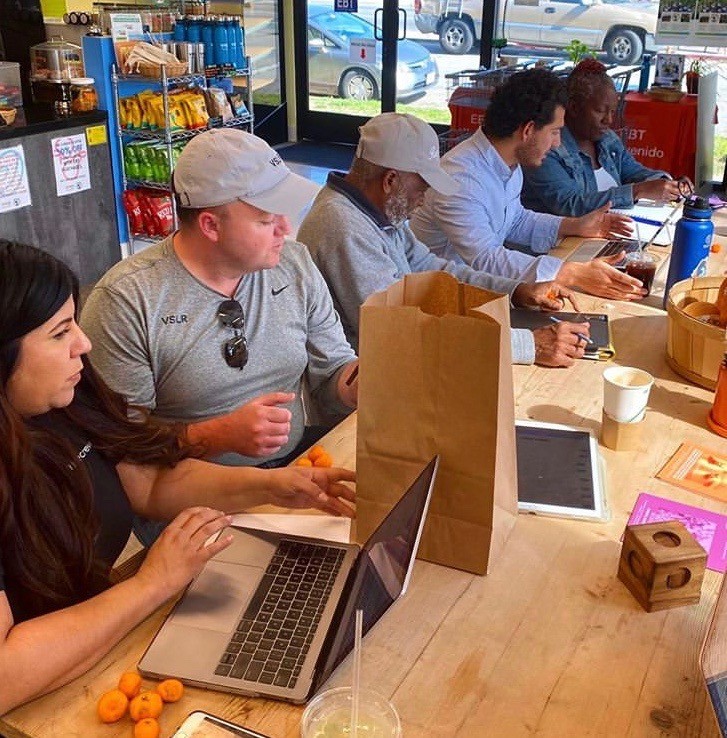
Across Los Angeles, community stores–small, community-led spaces offering free or low-cost food, hygiene items, and household goods–have become an essential lifeline for unhoused and low-income families. While they resemble traditional food pantries, these stores operate with a deeper purpose: restoring consistency, autonomy, and dignity in neighborhoods where basic goods are increasingly out of reach.
Los Angeles County has one of the nation’s highest rates of food and housing insecurity, and many neighborhoods lack accessible, affordable grocery options. Rising costs push families toward convenience stories, which rarely carry fresh foods. For unhoused residents, even purchasing basics like toothpaste or socks can be an impossible barrier. Community stores step in to fill these gaps through mutual aid, community ownership, and trust-based distribution.
These stores take many forms. Some are permanent storefronts, like the Village Market Place in South LA, operated by Community Services Unlimited, which uses a sliding scale model (a cost adjusted based on the customer’s ability to pay) to ensure healthy produce remains accessible. Others, such as LA CAN’s community grocery in Skid Row, offer low or no-cost food to residents facing extreme economic hardship. In Koreatown, groups like People’s Pantry LA and Ktown For All maintain community fridges and pop-up supply stations that operate on a “take what you need” basis. Each model reflects the same principle: community members deserve care without barriers.
What makes community stores especially effective is their flexibility. They do not require IDs, proof of income, or long wait times–barriers that often discourage individuals from using traditional aid services. Instead, they rely on mutual trust and local leadership.
Beyond meeting material needs, these stores build social infrastructure. They create consistent gathering places where volunteers, residents, and unhoused neighbors interact without stigma. This relational environment reduces isolation and fosters community power, making the stores not just emergency resources but catalysts for long-term stability.
As Los Angeles continues to navigate housing shortages and rising costs of living, community stores offer a replicable, community-centered model for supporting residents with dignity, Their impact shows that grassroots solutions–designed by and for the community–can strengthen public health, reduce barriers, and reimagine what local care systems can look like.
Across Los Angeles, community stores–small, community-led spaces offering free or low-cost food, hygiene items, and household goods–have become an essential lifeline for unhoused and low-income families. While they resemble traditional food pantries, these stores operate with a deeper purpose: restoring consistency, autonomy, and dignity in neighborhoods where basic goods are increasingly out of reach.
Los Angeles County has one of the nation’s highest rates of food and housing insecurity, and many neighborhoods lack accessible, affordable grocery options. Rising costs push families toward convenience stories, which rarely carry fresh foods. For unhoused residents, even purchasing basics like toothpaste or socks can be an impossible barrier. Community stores step in to fill these gaps through mutual aid, community ownership, and trust-based distribution.
These stores take many forms. Some are permanent storefronts, like the Village Market Place in South LA, operated by Community Services Unlimited, which uses a sliding scale model (a cost adjusted based on the customer’s ability to pay) to ensure healthy produce remains accessible. Others, such as LA CAN’s community grocery in Skid Row, offer low or no-cost food to residents facing extreme economic hardship. In Koreatown, groups like People’s Pantry LA and Ktown For All maintain community fridges and pop-up supply stations that operate on a “take what you need” basis. Each model reflects the same principle: community members deserve care without barriers.
What makes community stores especially effective is their flexibility. They do not require IDs, proof of income, or long wait times–barriers that often discourage individuals from using traditional aid services. Instead, they rely on mutual trust and local leadership.
Beyond meeting material needs, these stores build social infrastructure. They create consistent gathering places where volunteers, residents, and unhoused neighbors interact without stigma. This relational environment reduces isolation and fosters community power, making the stores not just emergency resources but catalysts for long-term stability.
As Los Angeles continues to navigate housing shortages and rising costs of living, community stores offer a replicable, community-centered model for supporting residents with dignity, Their impact shows that grassroots solutions–designed by and for the community–can strengthen public health, reduce barriers, and reimagine what local care systems can look like.

Project Lux
Street-level support. System-level change.
© 2025
Project Lux is a 501(c)(3) nonprofit organization.
EIN: 86-1951744
Project Lux
Street-level support. System-level change.
© 2025
Project Lux is a 501(c)(3) nonprofit organization.
EIN: 86-1951744