Research & Reports
Research & Reports
Research & Reports
Access to Hygiene and Sanitation for Unhoused Individuals in the Bay Area
Access to Hygiene and Sanitation for Unhoused Individuals in the Bay Area
Access to Hygiene and Sanitation for Unhoused Individuals in the Bay Area
Grace Thomas
Grace Thomas
June 5, 2026
June 5, 2026
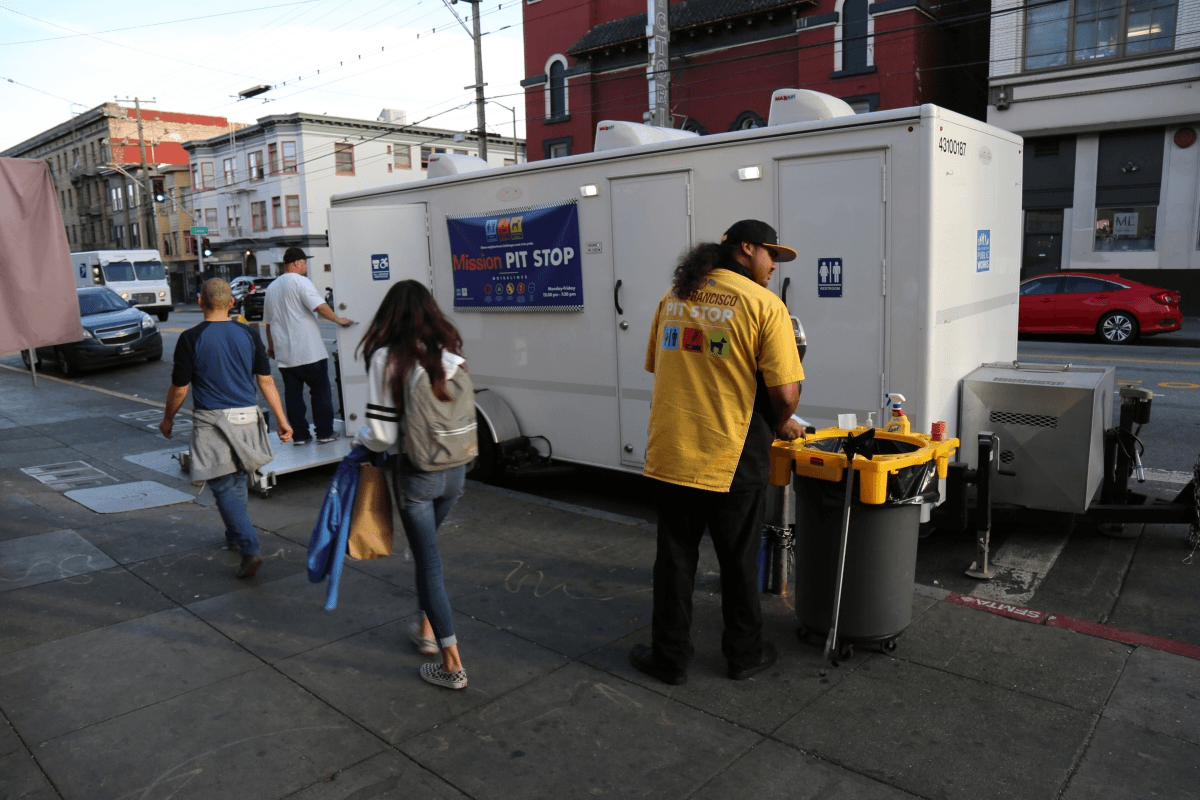
In the Bay Area (San Francisco, Oakland, Alameda County), access to showers, restrooms, and clean water is a core social determinant of public health. Unhoused individuals face limited access due to infrastructure shortages, restricted availability, and displacement, making sanitation a structural public health issue that contributes to disease spread and long-term health instability.
What This Means for Unhoused Individuals
Limited Restroom and Shower Access
Public restrooms and hygiene facilities are scarce, often restricted by hours, location, or program eligibility, forcing individuals to rely on inconsistent or overcrowded services.
San Francisco Pit Stop Public Toilet Program
Unreliable Access to Clean Water
Drinking water access depends on businesses or limited public sources, creating inconsistent and sometimes unsafe hydration and hygiene conditions.
Displacement and Loss of Hygiene Resources
Encampment sweeps disrupt access to sanitation sites and frequently result in loss of hygiene supplies, worsening instability.
American Civil Liberties Union North California
Limited Access to Menstrual and Women’s Health Products
Access to tampons, pads, and other menstrual products is inconsistent, often dependent on shelters or outreach programs, leaving many without reliable supply.
Lack of products can lead to unsafe alternatives, increased risk of infection, and barriers to mobility, dignity, and participation in daily activities.
Why This Matters
Without consistent sanitation and hygiene access, individuals face:
Increased risk of infectious diseases (hepatitis A, skin infections, reproductive health issues) due to unsanitary conditions
Worsening chronic health conditions and reduced ability to maintain hygiene necessary for employment or services
Center for Disease Control and Prevention hygiene and sanitation
Key Barriers
Infrastructure shortages: too few restrooms, showers, and hygiene distribution points
Restricted access: limited hours and eligibility requirements exclude unsheltered individuals
Cost barriers: hygiene and menstrual products are often unaffordable without income
Criminalization: laws penalize public sanitation behaviors without providing alternatives
Displacement: sweeps interrupt access and result in loss of supplies
Healthcare Impact
Lack of sanitation and menstrual hygiene access increases disease transmission, reproductive health risks, emergency healthcare use, and long-term public health costs.
Policy Solutions
Expand infrastructure: increase 24/7 restrooms, showers, and mobile hygiene units
Ensure product access: provide free menstrual and hygiene products through public programs and outreach
Integrate services: co-locate sanitation and product distribution with shelters, clinics, and outreach
Protect continuity: maintain access to hygiene resources during encampment removals
Conclusion
In the Bay Area, lack of sanitation and hygiene access, including menstrual products, is a systemic public health failure. Expanding infrastructure and ensuring consistent access to basic hygiene resources is a high-impact, locally actionable solution to improve health outcomes and reduce inequality.
Works Cited
“Pit Stop Public Toilet Program.” San Francisco Public Works, sfpublicworks.org/pitstop. Accessed 3 June 2026.
“Rights of Unhoused People.” ACLU of Northern California, 2 Apr. 2026, www.aclunorcal.org/issues/rights-of-unhoused-people/.
“Water, Sanitation, and Environmentally Related Hygiene (WASH).” Centers for Disease Control and Prevention, Centers for Disease Control and Prevention, www.cdc.gov/hygiene/index.html. Accessed 3 June 2026.
In the Bay Area (San Francisco, Oakland, Alameda County), access to showers, restrooms, and clean water is a core social determinant of public health. Unhoused individuals face limited access due to infrastructure shortages, restricted availability, and displacement, making sanitation a structural public health issue that contributes to disease spread and long-term health instability.
What This Means for Unhoused Individuals
Limited Restroom and Shower Access
Public restrooms and hygiene facilities are scarce, often restricted by hours, location, or program eligibility, forcing individuals to rely on inconsistent or overcrowded services.
San Francisco Pit Stop Public Toilet Program
Unreliable Access to Clean Water
Drinking water access depends on businesses or limited public sources, creating inconsistent and sometimes unsafe hydration and hygiene conditions.
Displacement and Loss of Hygiene Resources
Encampment sweeps disrupt access to sanitation sites and frequently result in loss of hygiene supplies, worsening instability.
American Civil Liberties Union North California
Limited Access to Menstrual and Women’s Health Products
Access to tampons, pads, and other menstrual products is inconsistent, often dependent on shelters or outreach programs, leaving many without reliable supply.
Lack of products can lead to unsafe alternatives, increased risk of infection, and barriers to mobility, dignity, and participation in daily activities.
Why This Matters
Without consistent sanitation and hygiene access, individuals face:
Increased risk of infectious diseases (hepatitis A, skin infections, reproductive health issues) due to unsanitary conditions
Worsening chronic health conditions and reduced ability to maintain hygiene necessary for employment or services
Center for Disease Control and Prevention hygiene and sanitation
Key Barriers
Infrastructure shortages: too few restrooms, showers, and hygiene distribution points
Restricted access: limited hours and eligibility requirements exclude unsheltered individuals
Cost barriers: hygiene and menstrual products are often unaffordable without income
Criminalization: laws penalize public sanitation behaviors without providing alternatives
Displacement: sweeps interrupt access and result in loss of supplies
Healthcare Impact
Lack of sanitation and menstrual hygiene access increases disease transmission, reproductive health risks, emergency healthcare use, and long-term public health costs.
Policy Solutions
Expand infrastructure: increase 24/7 restrooms, showers, and mobile hygiene units
Ensure product access: provide free menstrual and hygiene products through public programs and outreach
Integrate services: co-locate sanitation and product distribution with shelters, clinics, and outreach
Protect continuity: maintain access to hygiene resources during encampment removals
Conclusion
In the Bay Area, lack of sanitation and hygiene access, including menstrual products, is a systemic public health failure. Expanding infrastructure and ensuring consistent access to basic hygiene resources is a high-impact, locally actionable solution to improve health outcomes and reduce inequality.
Works Cited
“Pit Stop Public Toilet Program.” San Francisco Public Works, sfpublicworks.org/pitstop. Accessed 3 June 2026.
“Rights of Unhoused People.” ACLU of Northern California, 2 Apr. 2026, www.aclunorcal.org/issues/rights-of-unhoused-people/.
“Water, Sanitation, and Environmentally Related Hygiene (WASH).” Centers for Disease Control and Prevention, Centers for Disease Control and Prevention, www.cdc.gov/hygiene/index.html. Accessed 3 June 2026.

Project Lux
Street-level support. System-level change.
© 2025
Project Lux is a 501(c)(3) nonprofit organization.
EIN: 86-1951744
Project Lux
Street-level support. System-level change.
© 2025
Project Lux is a 501(c)(3) nonprofit organization.
EIN: 86-1951744